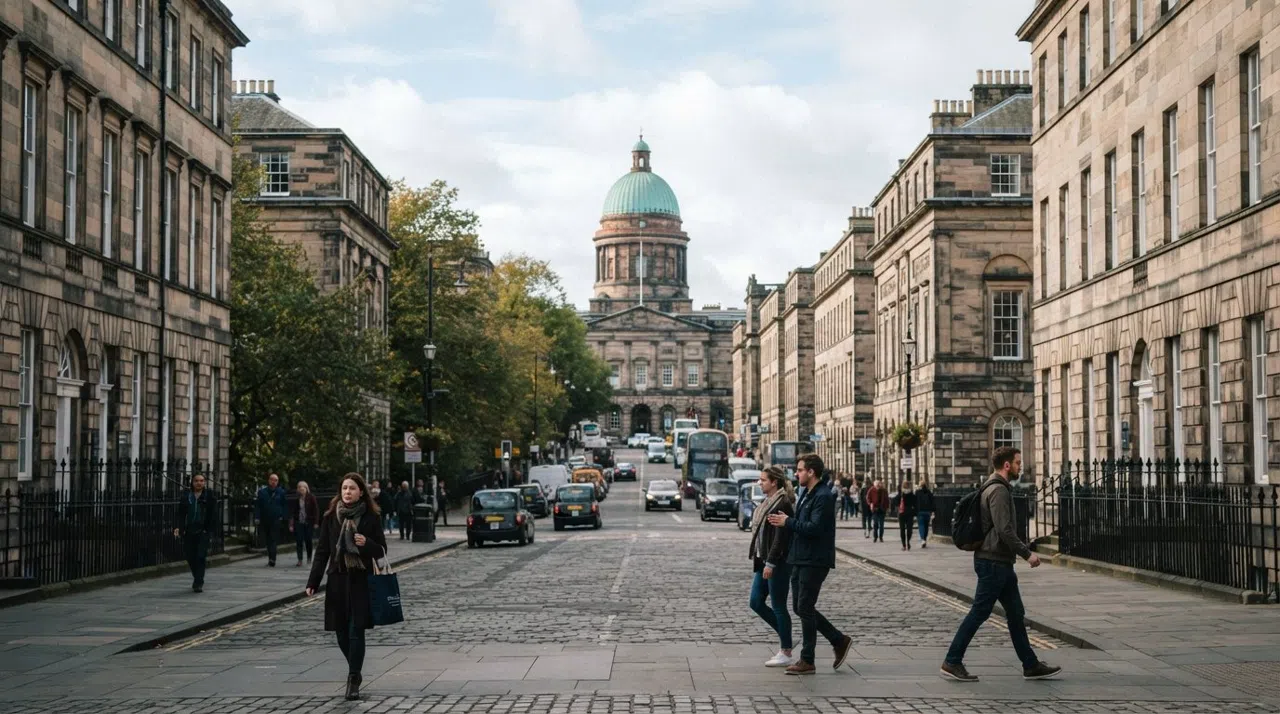

Cross Princes Street from the castle side and the city changes key entirely. The medieval clutter falls away, and suddenly you’re in a place built on confidence: a Georgian grid of wide, dead-straight streets, pale sandstone terraces and squares with private gardens, all of it laid out in the 1760s with the sort of civic self-belief Edinburgh has never quite shaken off. New Town is where the city goes to look composed. It is also where it goes to eat properly, shop properly and drink like it has somewhere to be in the morning.
The trick of the place is that it feels formal without feeling frozen. James Craig’s plan still reads clearly two and a half centuries on: Princes, George and Queen running west to east, stitched together by cross streets and anchored by St Andrew Square and Charlotte Square. The streets are broad enough for café tables and the odd festival marquee, but not so broad that the place loses its manners. Walk it and you feel the order in your feet. Walk it after dark and you notice something else: the hush. The district’s public face is polished, but the residential streets behind it - Heriot Row, Great King Street, Drummond Place - are genuinely lamplit and net-curtained, the sort of streets where people actually live rather than merely admire the cornicing.
What the New Town is known for
New Town is Georgian Edinburgh at its grandest: a planned 18th- and early-19th-century development of ruler-straight streets, geometric squares and pale ashlar terraces that, with the Old Town, makes up the city’s UNESCO World Heritage Site. It is compact, flat and gloriously walkable, which is half the pleasure. The other half is that it does different jobs very well. Princes Street faces the castle across the gardens and does the big shops. George Street, the spine of the grid, does the restaurants, cocktail bars and former banking halls. Queen Street is quieter and hides some of the best bars in their basements, which feels right for a city that likes its pleasures slightly concealed.
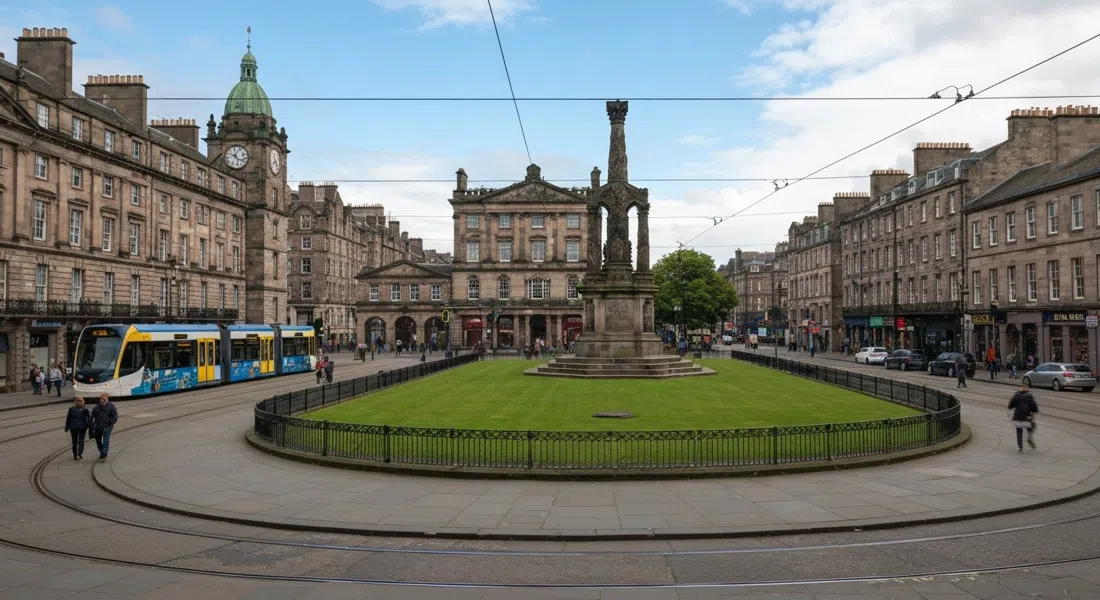
St Andrew Square is the district’s living room. There’s the manicured lawn, the Melville Monument standing at the centre like a stern host, the tram stop, Harvey Nichols and a run of buzzy restaurants around the edges. It is the place where the city seems to collect itself before heading out again. On the west side, the queue outside Dishoom is practically part of the furniture.
If you want to understand how the wealthy actually lived here, step into The Georgian House at No. 7 Charlotte Square. It is a National Trust for Scotland townhouse designed by Robert Adam and dressed as a wealthy family’s home of the 1790s, and it gives the whole district a different temperature. The rooms are elegant, yes, but what lingers is the discipline of them: the measured proportions, the confidence in symmetry, the sense that status was once expressed not by shouting but by getting the mouldings right. The Assembly Rooms on George Street, opened in 1787, tell a similar story. They were the social heart of Georgian society and still host events, which is about as Edinburgh as it gets: old money, good plasterwork, and a room that refuses to retire.
The New Town’s appeal is that it still works as a working city centre. By day George Street carries office workers, shoppers and long lunches. By evening the register shifts to grown-up rather than rowdy. There are cocktail bars in Queen Street basements, whisky and oysters in Victorian rooms, and the Rose Street pub run for anyone who wants a classic, un-fussy night. It is not the place for a gritty alternative scene, and thank heavens for small mercies.
Where to eat & drink
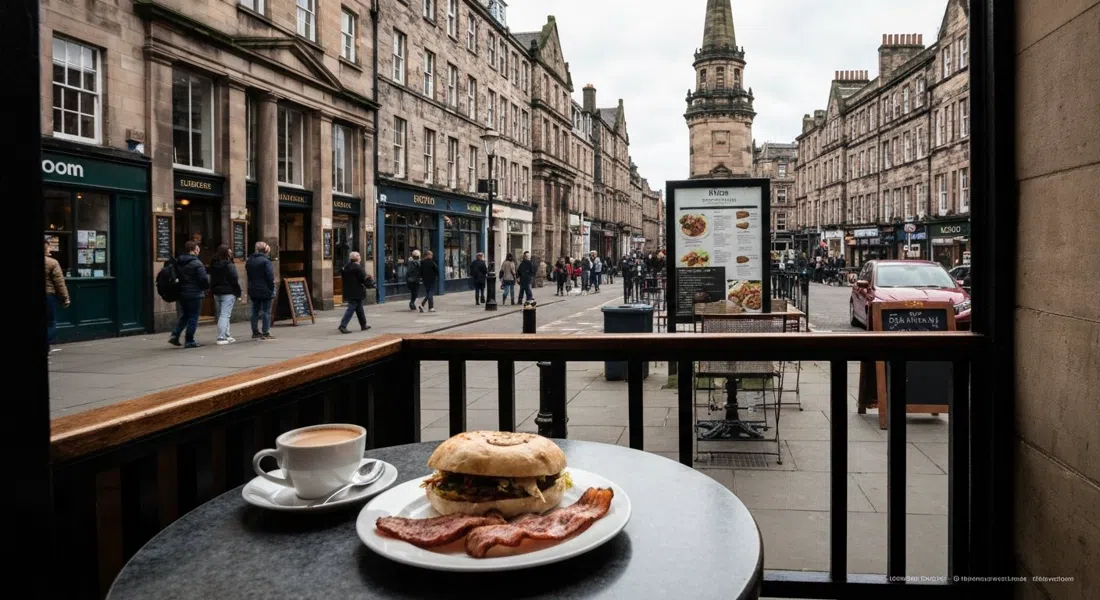
The New Town is where Edinburgh puts its best tables, and it does so with a certain amount of theatre. Dishoom on the west side of St Andrew Square recreates a mid-century Bombay Irani café, and the queue outside is one of those city rituals that locals grumble about while joining it anyway. Come for breakfast and the bacon naan roll - made with applewood-smoked Ayrshire bacon - is the order; naan rolls run until 11.45am, and if you arrive before the crowds build you can usually walk in without needing to perform patience for the benefit of the pavement.
Chef Stuart Ralston has two Michelin Bib Gourmand rooms here, and they feel like two sides of the same instinct. Noto on Thistle Street does globe-trotting small plates with an Asian lean, and the combination of duck bao and miso-chocolate dessert tells you everything you need to know about how it behaves: precise, playful, and not afraid to make you order one more thing than you intended. Tipo on Hanover Street is the more casual sibling, a pasta-led room where the point is comfort without laziness. Both are the sort of places that remind you Edinburgh has become a serious dining city without turning into a parody of itself.
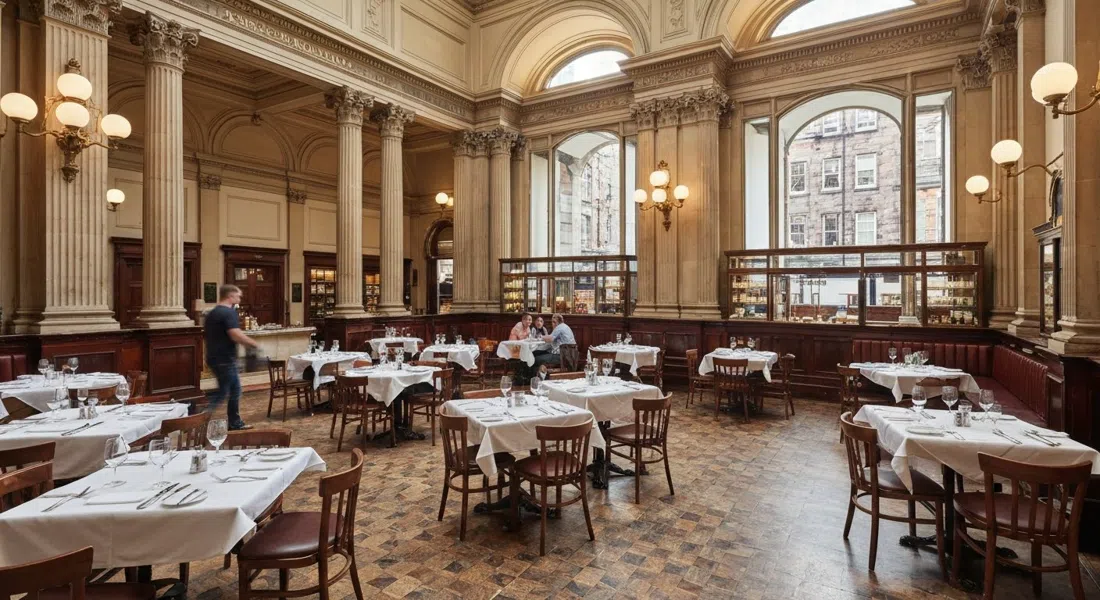
Contini George Street takes a different tack, and a grander room. It occupies a soaring former banking hall modelled on a Florentine palazzo, with 26-foot ceilings, Corinthian columns and fresh pasta made every morning. That kind of setting can tip into self-regard in lesser hands, but here the architecture and the food seem to agree with each other. Down a cobbled lane off Thistle Street, Café St Honoré is the opposite in mood: a 1940s-Paris bistro of bentwood chairs and mirrored walls where chef Neil Forbes cooks daily-changing French-Scottish menus. It is intimate, disciplined and faintly old-world in a way that never feels costume-y. Fishers in the City on Thistle Street is the reliable one, a Scottish seafood bistro that knows the value of keeping the lights on and the fish right.
For something more all-day and less fussy, The Ivy on the Square brings a terrace over St Andrew Square and the sort of dependable buzz that keeps a city-centre room alive from lunch through dinner. And if you just need coffee between meals, the New Town’s independents - Wellington Coffee off George Street, Lowdown on George Street and Cairngorm Coffee on Frederick Street - are the places locals rate without needing to make a speech about it.
Going out
Nights here lean sophisticated. Cocktails and whisky, not clubs. The city’s best-known bar scene sits within a two-minute walk of one another on Queen Street, which is useful if you prefer your evening to involve less cab-hailing and more knowing where you’re going. Bramble is the landmark: an unmarked basement cocktail bar that helped invent the modern Edinburgh cocktail scene and still sits comfortably on the World’s 50 Best Bars list. Order the Bramble itself - gin, blackberry, lemon - and you’re drinking a small piece of local history, which is more than can be said for most drinks with fruit in them.
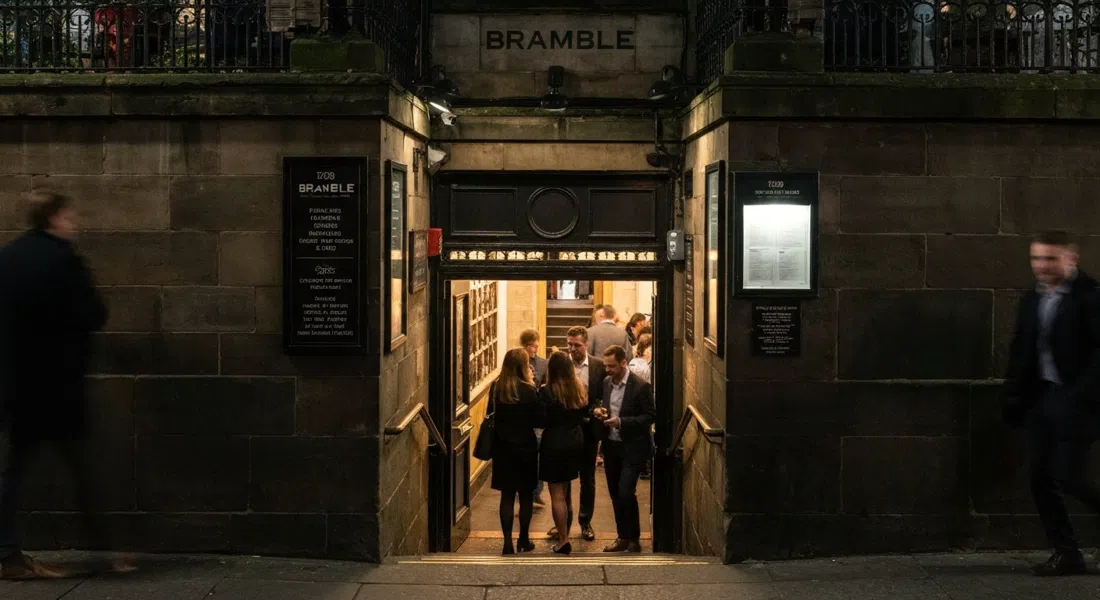
Round the corner, Panda & Sons hides a prohibition-style bar behind a mock barbershop front and has ranked among the UK’s very top cocktail rooms for its freezing and cryo-concentration wizardry. It sounds like the sort of thing a laboratory would put on a menu, but the effect is all atmosphere and precision. Lucky Liquor Co, Bramble’s little sibling, is tiny and gloriously stubborn, building an entire menu around just 13 bottles that are swapped every 13 weeks. That’s a neat Edinburgh sort of joke: fewer bottles, more opinion.
If you prefer your drinks with a bit more Victorian heft, Café Royal on West Register Street is a Category A-listed 1863 pub with Doulton tile murals and Edinburgh’s oldest oyster bar. Next door, The Voodoo Rooms does cocktails, bistro plates and live music in an ornately gilded first-floor space by St Andrew Square. The Dome on George Street, meanwhile, pours drinks under a vast glass cupola in another former bank, which is exactly the sort of place where a city can convince itself it is still in charge of the evening.
And then there is Rose Street, the pedestrian lane between Princes and George, where the traditional pub run still has enough life to feel like a local institution rather than a heritage exercise. The Abbotsford, with its island bar and 1902 Edwardian bones, is the anchor of it all. The Kenilworth is there too, among the dozen-odd pubs along the length of the street, and the whole run has that slightly chaotic, slightly civilised energy that Edinburgh does so well when it isn’t trying too hard.
Things to do / what to see
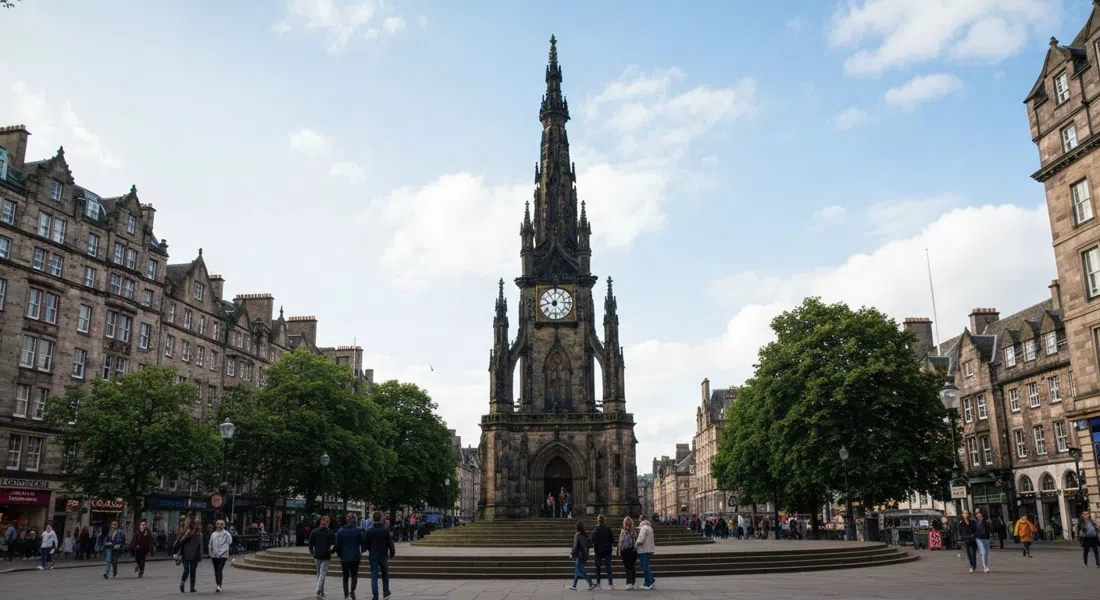
The Scott Monument is the New Town’s exclamation mark: a 61-metre Victorian Gothic spire to Sir Walter Scott, the largest monument to a writer in the world after José Martí’s in Havana. It is gloriously overcommitted, all dark stone and spiky ambition, and if you climb its 287 narrow spiral steps, the reward is a staged panorama over Princes Street, the gardens and the castle beyond. Edinburgh likes a viewpoint, but it likes one with a bit of effort attached.
At the foot of it, split between the Mound and Princes Street Gardens, the Scottish National Gallery holds the national collection of Old Masters and Scottish art and is free to enter; the reopened Scottish galleries downstairs are the highlight. It’s the sort of place you can drift into for half an hour and emerge an hour later, slightly rearranged. Up on Queen Street, the red-sandstone Scottish National Portrait Gallery is another free stop, and an architecturally spectacular one at that. It has the proper civic grandeur of a city that still believes galleries should look like they mean it.
For the postcard skyline, walk ten minutes east and up Calton Hill, where the National Monument’s unfinished columns, the Nelson Monument and the old City Observatory frame the classic view back over the Old Town - best at sunset. Edinburgh has many good views; this is the one people put on the fridge. Below it all, Princes Street Gardens fill the old drained loch bed beneath the castle rock, a green trench ideal for a sit-down between sights, or for pretending you’re resting your legs while actually enjoying the city’s most convenient piece of scenery.
Shopping
The New Town is Edinburgh’s shopping core, tiered by budget and by mood. For designer names, Multrees Walk is the luxury quarter: a pedestrian precinct off St Andrew Square anchored by Scotland’s only Harvey Nichols and lined with the likes of Louis Vuitton and Burberry. It is polished, self-conscious and entirely aware of itself, which is not a criticism. If you want the luxury version of a city centre, this is how it should look: contained, walkable, and just a touch smug.
George Street is the elegant middle tier, with more considered high street and homeware brands - Anthropologie, Jo Malone, White Stuff, Hobbs - in Georgian shopfronts. Princes Street carries the big mainstream chains, though it is more workaday than the rest, a useful strip rather than a seductive one. On the eastern edge, the vast, modern St James Quarter adds a covered shopping centre, cinema and food hall, plus the sculptural bronze-panelled W hotel that locals nicknamed the “golden turd.” Edinburgh can be affectionate when it wants to be, but it is not above a decent nickname.
Away from the retail streets, the boutiques thin north toward Stockbridge, and the independent-leaning cross streets - Thistle Street, Broughton Street on the northeastern fringe - are where the smaller shops, wine merchants and delis hide. That’s where the New Town gets a little less polished and a little more interesting, which is often how you know you’re in the right part of a city.
Where to stay in the New Town
This is the best all-round base in Edinburgh: central and endlessly walkable, but calmer than the Old Town once the shops shut. The trade-off is price. This is the pricier end of the city, and it knows it. George Street puts you on the grandest address, steps from the restaurants and bars, with converted-townhouse and aparthotel options. Around Charlotte Square and its private gardens sits the New Town’s most refined luxury, in seven-townhouse Georgian conversions. The St Andrew Square / Princes Street edge is the most convenient for Waverley station, the airport tram and shopping, at the cost of some street noise. For genuine quiet, the residential streets behind - Heriot Row, Great King Street, Drummond Place - are lamplit and hushed, better for sleep though a slightly longer walk to the action.
As a rule, book a room off the main drags if you’re a light sleeper; George Street bars run to around 1am at weekends. If you want central, elegant and easy, New Town is hard to beat. If you want the castle and closes literally at the door, you’re in the wrong half of the city. {{HOTELS}}
Getting around
The New Town is small, flat and made for walking - the grid is what makes it so navigable. Waverley station, the main rail hub, sits at the eastern edge below Princes Street, a few minutes on foot from most of the district. The tram is the key line: it runs along Princes Street with stops at St Andrew Square and, for the eastern/Leith side, Picardy Place, connecting straight to Edinburgh Airport in about 35 minutes, with trams every seven minutes or so. Buses fan out from Princes Street and George Street to every corner of the city.
On foot, the Old Town and the Royal Mile are a five-to-ten-minute walk south across Princes Street or the Mound; Stockbridge is a gentle 10-15 minutes downhill to the northwest, and Calton Hill and the start of Leith Walk are just east. You rarely need a taxi within the centre, and driving or parking here is more hassle than help. Which, in a city built on a grid, feels only fair.