Edinburgh
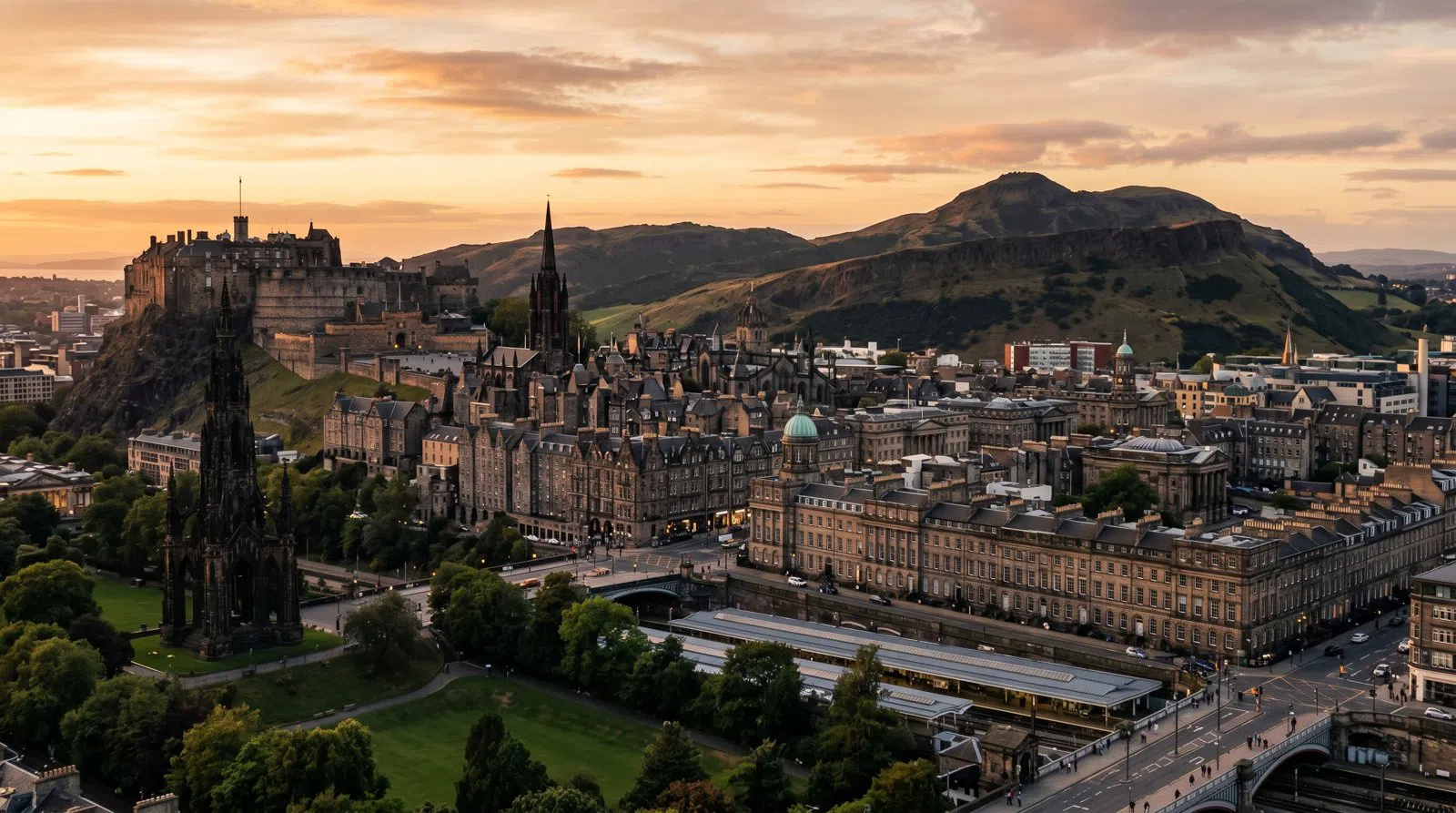
Volcanic crags rise abruptly from the coastal plain, carving a skyline of dark basalt and soot-stained sandstone.
Guests & rooms
The Edinburgh guide
An insider’s read on Edinburgh
VVolcanic crags rise abruptly from the coastal plain, carving a skyline of dark basalt and soot-stained sandstone.
Built on the remnants of an extinct volcano, the city's topography dictated its history. In the medieval era, defensive needs forced the population to crowd onto the narrow ridge running down from the castle. The result was the world's first high-rise living, with timber and stone tenements climbing up to fourteen stories. This density bred squalor, leading to the 18th-century construction of the New Town—a masterpiece of neoclassical urban planning designed to keep the wealthy elite from fleeing to London. This physical split created a dual identity. The city is the birthplace of the Scottish Enlightenment, producing thinkers like David Hume and Adam Smith, yet it also inspired the split-personality tale of Jekyll and Hyde. Today, this tension persists. It is a highly educated, prosperous financial hub that retains a gritty, creative underbelly, fiercely proud of its Scottish heritage while remaining resolutely internationalist.
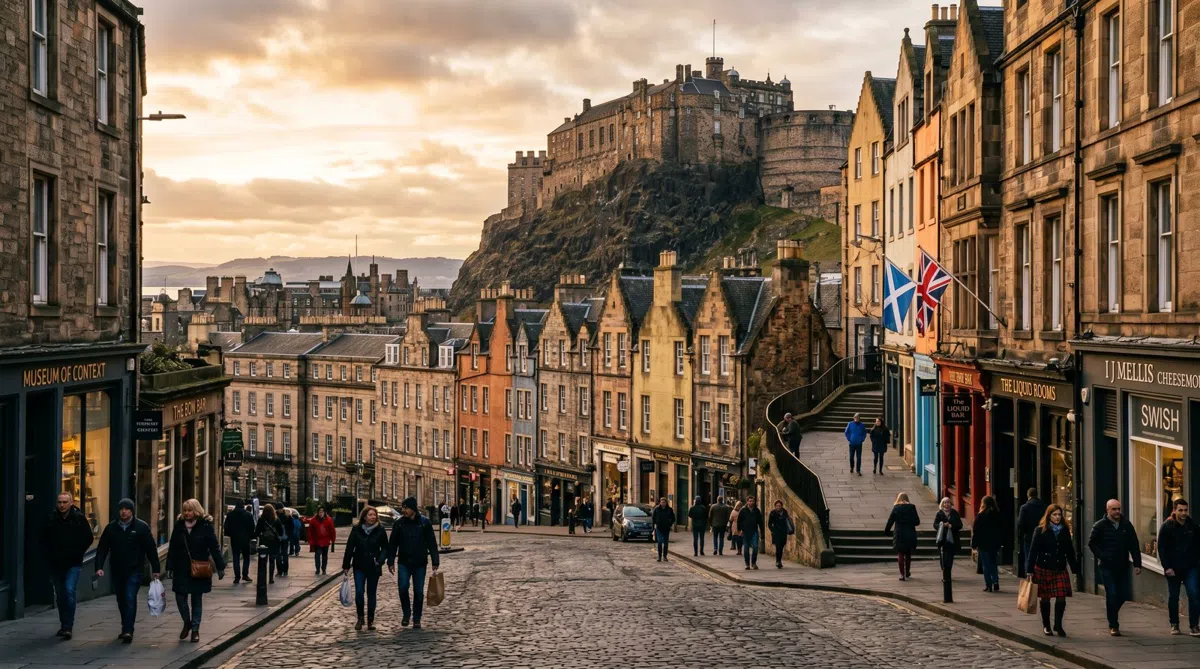
PLATE IEdinburgh, Scotland
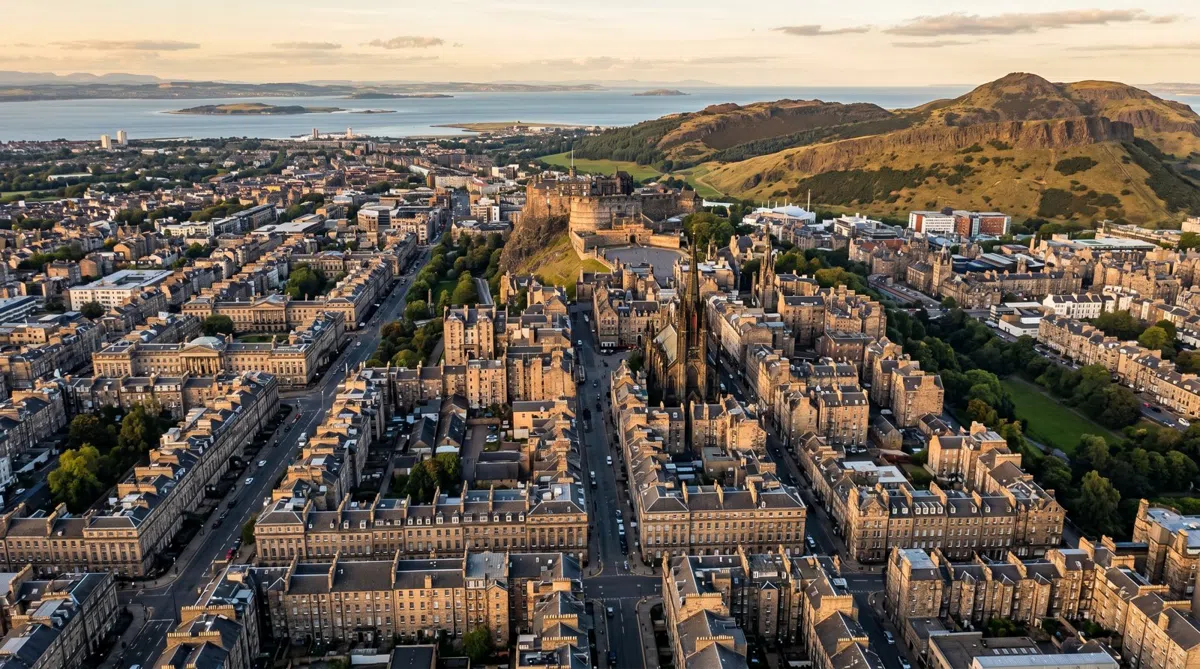
Guides & ideas
The Edinburgh reading list
Hand-written guides from our editors — itineraries, the best of after dark, where to eat, and what’s genuinely worth your time.

Beneath the Royal Mile: Edinburgh's Underground Vaults and the City That Lives Below
Below the South Bridge lies a second Edinburgh — a sealed labyrinth where the city's poorest once lived in total darkness, and the honest history down there is stranger than any ghost story sold at the door.
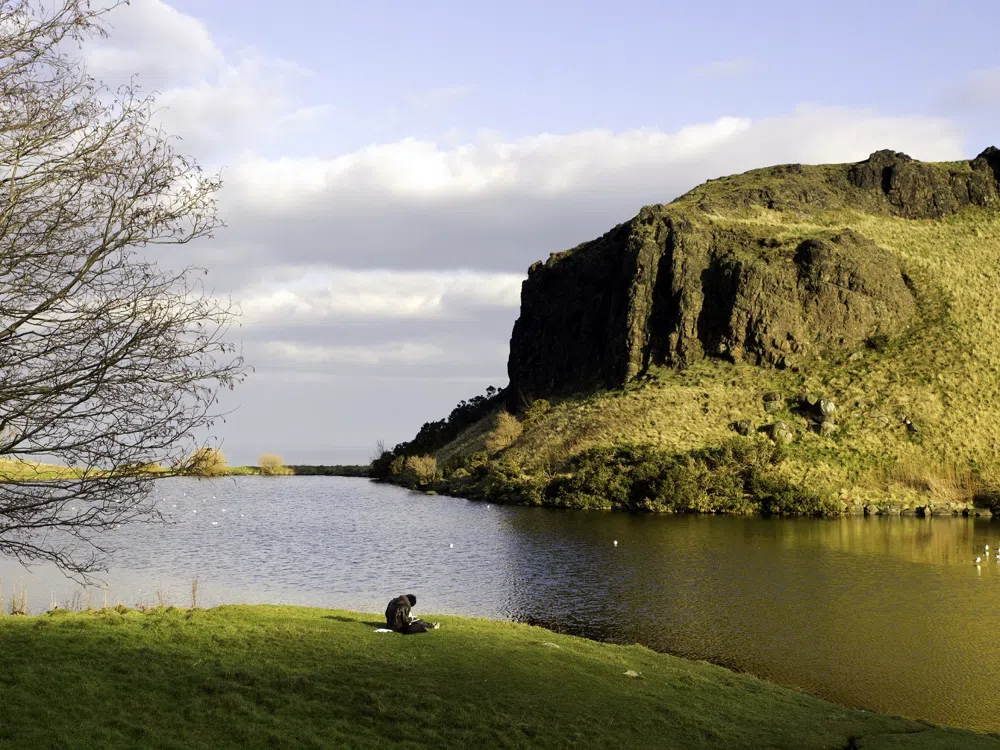
Forged in Fire: The Volcanic Bones Beneath Edinburgh
A grounded, boots-on walker's guide to the extinct volcanoes, crags and plugs the city was built on — from the summit everyone climbs to the gannet-white rock you reach by boat.

Monsters, Lochs and Glens: The Highland Escape That Starts in Edinburgh
An honest, unhurried field guide to the best Highland day trips and multi-day runs from Edinburgh — which earn the early alarm, which suit a coachload and which you should stop pretending you can do in a day.

The Best Day Trips from Edinburgh to the Scottish Highlands
Twelve honest, road-tested escapes from the capital — from the Loch Ness classic to Highlands-lite lochs an hour away — with the timings, prices and group realities the brochures leave out.
Where to base yourself
The neighborhoods
01
Old Town
For First-time visitors who want to be steps from major historic sites. The trade-off is high tourist density, elevated prices, and constant street noise.
A dense maze of medieval closes, towering tenements, and cobblestone streets running down the spine of the Royal Mile.
Where to stay — Historic apartments in converted stone buildings or high-end hotels tucked off the main thoroughfare.
02
New Town
For Those seeking upscale shopping, fine dining, and architectural elegance. The trade-off is a slightly formal atmosphere and premium accommodation costs.
An orderly grid of grand Georgian townhouses, wide avenues, private gardens, and neoclassical monuments.
Where to stay — Grand historic hotels or boutique guesthouses inside converted Georgian townhouses.
03
Stockbridge
For Travelers looking for a slower, local pace, excellent cafes, and Sunday markets. The trade-off is a 20-minute uphill walk to the city center.
A affluent, bohemian village-style neighborhood with independent boutiques, cheese shops, and Victorian terraced streets.
Where to stay — Charming bed and breakfasts or quiet residential rental apartments.
04
Leith
For Food lovers and creative spirits who prefer waterfront views to medieval castles. The trade-off is the distance from the historic core, though the tram link mitigates this.
A historic port district that has evolved into a creative hub, blending industrial grit with Michelin-starred dining.
Where to stay — Modern waterfront apartments or converted warehouse hotels.
05
West End
For Visitors wanting a peaceful retreat close to the center, with excellent access to public transport. The trade-off is a lack of major tourist sights directly on your doorstep.
A handsome residential area of Victorian terraces, quiet mews, and independent boutiques clustered around William Street.
Where to stay — Elegant boutique hotels and serviced Victorian apartments.
06
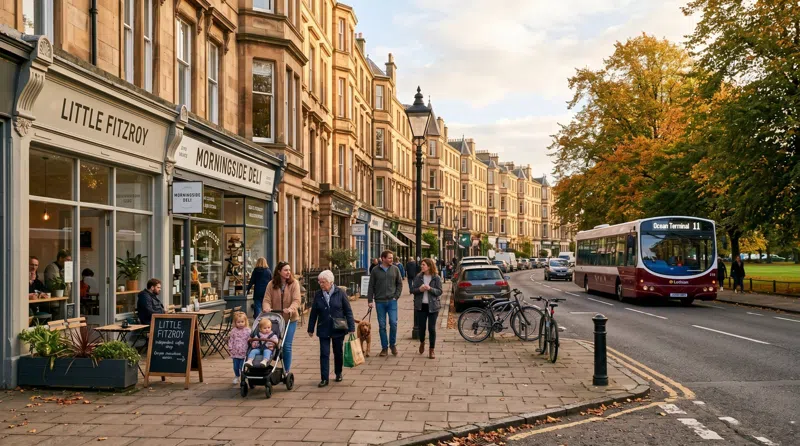
Bruntsfield & Morningside
For Families and slow travelers who want a green, quiet base near expansive parks. The trade-off is the reliance on buses to reach the main sights.
Leafy, prosperous southern suburbs filled with Victorian villas, independent coffee shops, and family-run delicatessens.
Where to stay — Upscale family guesthouses and quiet residential rentals.
07
Southside & Newington
For Budget travelers, academics, and those looking for a casual, unpretentious atmosphere. The trade-off is the slightly scruffy student housing blocks.
A diverse, energetic student district fueled by the University of Edinburgh, featuring cheap eats, bookshops, and global grocers.
Where to stay — Budget hotels, student hostels, and simple rental flats.
08
Abbeyhill & Easter Road
For Younger travelers seeking an authentic local vibe and lower prices near Holyrood Park. The trade-off is a lack of traditional luxury lodging options.
A working-class neighborhood undergoing a creative revival, characterized by stone tenements, artisan bakeries, and artist studios.
Where to stay — Simple tenement flats and budget-friendly guesthouses.
09
Portobello
For Beach lovers and those traveling with dogs who want sea air and coastal walks. The trade-off is a 30-minute bus ride to the city center.
A classic Victorian seaside resort with a long sandy beach, an active promenade, and a community-focused high street.
Where to stay — Coastal bed and breakfasts or seaside holiday rentals.
Book direct
Book a hotel in Edinburgh
Loading live availability and real-time prices…
Where to eat
Dining
The Ship on the Shore
€€€Leith
A classic waterfront institution serving champagne and seafood along the scenic banks of the Water of Leith.
Signature — The hot smoked salmon and Loch Fyne oysters.
Fishers in the City
€€New Town
Housed in a converted warehouse, this casual spot serves unpretentious, high-quality Scottish seafood with friendly service.
Signature — The classic fish and chips or the pan-fried halibut.
Hawksmoor Edinburgh
€€€€New Town
Located in a spectacular, wood-paneled former banking hall, serving impeccably sourced, charcoal-grilled native breed beef.
Signature — The bone-in prime rib, dry-aged for 35 days.
Kyloe Restaurant & Grill
€€€West End
A dedicated gourmet steakhouse overlooking the castle, focusing on prime cuts of Aberdeen Angus beef.
Signature — The Chateaubriand served with bone marrow gravy.
The Witchery by the Castle
€€€€Old Town
An ultra-romantic, gothic dining room draped in oak paneling and tapestries, located right at the gates of the castle.
Signature — The slow-cooked Balmoral Estate venison.
Cafe Royal
€€New Town
A Victorian masterpiece featuring stained glass and ceramic tile portraits, serving traditional pub fare and fresh oysters.
Signature — The classic haggis, neeps, and tatties with whisky sauce.
Howies Waterloo Place
€€Calton Hill
A lively, family-run restaurant in a Georgian hall serving seasonal, locally sourced Scottish game and fish at accessible prices.
Signature — The Cullen Skink (traditional smoked haddock soup).
The Kitchin
€€€€Leith
Chef Tom Kitchin's philosophy of 'From Nature to Plate' is executed in a converted whisky bond, delivering seasonal French-Scottish cuisine.
Signature — The rolled pig's head served with roasted langoustine.
Restaurant Martin Wishart
€€€€Leith
An elegant, minimalist dining room showcasing highly refined French classical techniques applied to pristine Scottish ingredients.
Signature — The halibut poached in brown butter with caviar.
Timberyard
€€€€Old Town
A family-run restaurant in a 19th-century timber warehouse, focusing on wild, foraged ingredients, butchery, and fermentation.
Signature — The multi-course tasting menu featuring locally foraged herbs and game.
Oink
€Old Town
A simple, no-nonsense shop serving hot, freshly carved hog roast rolls sourced directly from a Scottish borders farm.
Signature — The hog roast roll with crackling and sage and onion stuffing.
Mosque Kitchen
€Southside
An unpretentious institution serving hearty, aromatic, and incredibly cheap curry plates to students and locals alike.
Signature — The chicken jalfrezi with pilau rice.
Ting Thai Caravan
€Southside
Born as a festival street food stall, this energetic spot serves authentic, fast-paced Thai street food in a rustic setting.
Signature — The Pad Thai or the crispy pork belly with chili.
David Bann
€€Old Town
A stylish, long-running vegetarian restaurant serving inventive, globally inspired dishes in a refined setting.
Signature — The home-smoked fennel and goat's cheese tart.
Henderson's
€€Bruntsfield
A revival of the city's historic vegetarian pioneer, offering wholesome, organic, and locally sourced plant-based dishes.
Signature — The vegan haggis served with root vegetable mash.
After dark
Nightlife
Sneaky Pete's
Old Town
A tiny, legendary 100-capacity venue that hosts cutting-edge local and international DJs every single night of the week.
Cabaret Voltaire
Old Town
Set deep within the historic stone vaults beneath the South Bridge, this multi-room club is a cornerstone of the local underground scene.
The Liquid Room
Old Town
A long-established venue housed in a former church, hosting major club nights and touring live acts.
Panda & Sons
New Town
Hidden behind the facade of a vintage barbershop, this world-class speakeasy is famous for its innovative sub-zero cocktail techniques.
Bramble Bar & Lounge
New Town
An understated basement bar that pioneered the city's modern cocktail revival, featuring low ceilings and cozy alcoves.
Cold Town House
Grassmarket
A converted church featuring a rooftop terrace that sits directly beneath the towering cliffs of the castle.
Sandy Bell's
Southside
A world-famous folk music pub where musicians gather daily around tables for spontaneous, acoustic traditional music sessions.
Whistlebinkies
Old Town
A lively subterranean bar carved into the stone vaults, hosting live bands every night with free entry most of the week.
The Queen's Hall
Southside
A converted 19th-century church that hosts a diverse range of touring musicians, classical concerts, and jazz acts.
Art & history
Culture
National Museum of Scotland
Southside
A magnificent fusion of a Victorian cast-iron grand gallery and a modern sandstone building, housing everything from dinosaur bones to Scottish history.
Surgeons' Hall Museums
Southside
One of the oldest pathology collections in the world, showcasing historic medical instruments and anatomical specimens.
The Writers' Museum
Old Town
Tucked away in Lady Stair's Close, this historic house celebrates the lives of Scotland's literary giants: Burns, Scott, and Stevenson.
Edinburgh Castle
Old Town
The historic fortress dominating the skyline from its position on Castle Rock, housing the Honours of Scotland (the Crown Jewels).
Palace of Holyroodhouse
Abbeyhill
The official residence of the British monarch in Scotland, rich with royal history including the chambers of Mary, Queen of Scots.
Scott Monument
New Town
The largest monument to a writer in the world, a towering Victorian Gothic spire dedicated to Sir Walter Scott.
National Gallery of Scotland
New Town
Located on the Mound, this neoclassical building houses an exceptional collection of European art from the Renaissance to the post-impressionists.
National Gallery of Modern Art (Modern One & Two)
West End
Two grand neoclassical buildings set in sculpture parks, housing works by Picasso, Matisse, and prominent Scottish contemporary artists.
Fruitmarket Gallery
Old Town
A bright, welcoming contemporary art space located right next to Waverley Station, showcasing innovative international artists.
Timing
When to visit
Spring
April and May bring dry days and blooming cherry blossoms in the Meadows. Crowds are manageable, and accommodation rates are reasonable before the summer surge.
Summer
August is dominated by the Fringe and International Festivals. The city population doubles, prices skyrocket, and the streets are packed. July offers warmer weather without the festival chaos.
Autumn
September and October bring golden foliage to Princes Street Gardens and a crisp chill to the air. The autumn light is excellent for photography, though rain becomes more frequent.
Winter
November to January features dark afternoons, festive markets, and Hogmanay celebrations. The city suits the winter cold, with cozy pubs and roaring fires providing refuge from the wind.
What it costs
Budgeting
Logistics
Getting around
From the airport
The Edinburgh Trams run every 7 minutes from the terminal directly to the city center, taking around 30 minutes. Alternatively, the Airlink 100 express bus operates 24/7, reaching Waverley Bridge in approximately 25 minutes.
Public transit
Lothian Buses operate a comprehensive, incredibly reliable network across the city and its suburbs. Trams run on a single line from the airport through the center down to the port of Leith. Both systems accept contactless payment—simply tap your card or phone when boarding.
Passes & tickets
The Ridacard offers unlimited travel on buses and trams, available for weekly durations at a budget-friendly rate (€€). For shorter stays, the daily capping system on contactless payments ensures you never pay more than the price of a day ticket.
On foot
The city center is highly walkable, but the terrain is exceptionally steep. Walking from the New Town to the Old Town involves climbing significant inclines or public staircases. Sturdy, slip-resistant footwear is essential for the historic cobblestones.
Travel smart
Safety & etiquette
Local etiquette
- •When using escalators in train stations, stand on the right and walk on the left.
- •Tipping is customary in restaurants; 10% to 12.5% is standard for good service, but check your bill to ensure a service charge hasn't already been added.
- •Do not refer to people as English; ensure you use Scottish or British to avoid causing offense.
- •Always buy your tram ticket before boarding; inspectors are strict and do not accept excuses.
From the ground
Practical tips
1
Pack a windproof jacket rather than an umbrella; the high winds funneling through the streets quickly destroy umbrellas.
2
Avoid eating on the Royal Mile itself; walk just one block north or south to find significantly better quality and lower prices.
3
If visiting in August, book your accommodation at least six to nine months in advance to secure reasonable rates.
4
Use the Lothian Buses app to track bus arrival times in real-time, as traffic can occasionally cause delays.
5
When ordering fish and chips, try the local 'sauce'—a unique blend of brown sauce and vinegar.
6
Wear shoes with good grip; the historic stone steps and cobblestones become incredibly slick in the rain.
7
Take advantage of the late-night opening hours at the major galleries on Thursdays to avoid the daytime crowds.
Edinburgh FAQs
Do I need to book Edinburgh Castle tickets in advance?
Yes, you must book online beforehand. The castle operates on a strict timed-entry system, and walk-up tickets are rarely available during peak months.
Is the tap water safe to drink?
Yes, the tap water is exceptionally clean, safe, and widely considered to be of excellent quality due to natural upland sources.
What is the 'haar'?
The haar is a cold, thick sea fog that rolls in from the North Sea, occasionally blanketing the city in a dense mist while the surrounding hills remain sunny.
Can I walk to Dean Village from the city center?
Yes, it is a scenic 15-minute walk downhill from the West End or Princes Street, though the return journey is steep.
Are the museums really free?
Yes, major national museums and galleries, including the National Museum of Scotland, offer free admission, though donations are welcomed.